I’ve always thought pubs have more potential than what they are today – a drinking hole. I see an opportunity for pubs to be hubs for creating collective stories and memories in the communities they operate in. After all pubs were public houses where people of all age and background came together to experience the joys of community. This is a letter from one public house to another.
The Void Deck
The void deck is unique to Singapore’s public housing estates. Void decks are empty spaces on the ground floor used for people to pass through, take shelter and are usually where one finds the letterboxes and lifts. Beyond its function, it has an emotional role as a treasured heritage feature.
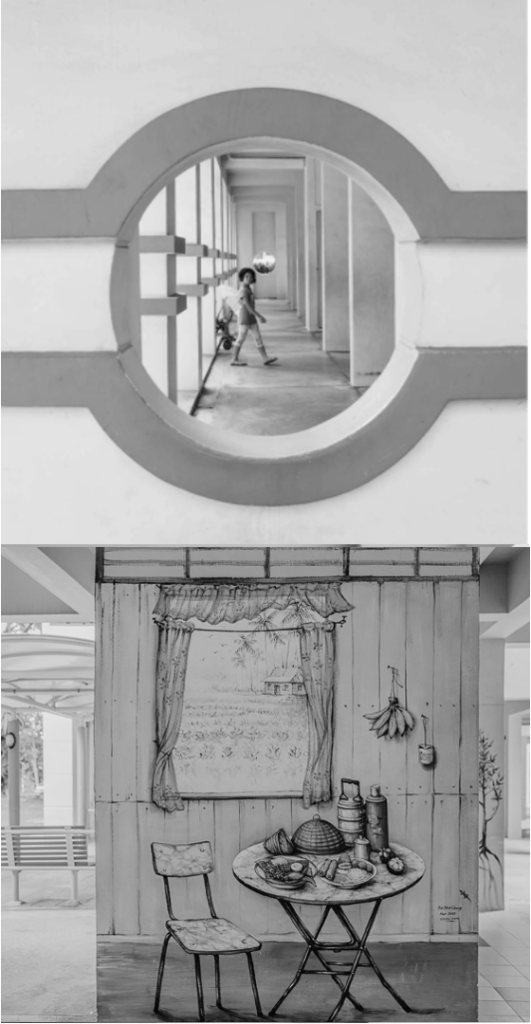
Void decks are time capsules of childhood memories like playing ping pong with other kids in the area, speeding through the pillars playing hide and seek or engaging in long rope competition. They are also a space for celebration and sorrow – traditionally used for Chinese funerals and Malay weddings. Other times they are bird singing corners for bird owners to come together and share their hobbies and quite often they are places for Uncles and Aunties to play chess and cards.
More recently, HDB residents have started converting these into third spaces. In Yishun, one has transformed into a community library – no membership, no fees. During the day, elderlies come, read and swap donated books (some don’t even come to read) and sit around with their tea chatting. In the afternoon, kids join in after school. In Macpherson, pillars have been turned into an art gallery, and another use flexible furniture to switch from workspaces during the day to social spaces at night.
These unassuming, empty building spaces are converted by many throughout the day to whatever they want it to be. Made of simple, white pillars and some concrete tables and chairs, they serve as a canvas for new stories, adventures and memories.
Though an architectural feature, void decks remain relevant as a key touchpoint for community interaction. Today, where younger and older generations connect online, there is a growing desire to go back to Kampong style living and socialising that had more meaning and was more genuine.
How might pubs, like void decks become a community pillar?
Void decks are essential features for fostering social cohesion, racial integration and age inclusivity. They are non judgemental spaces of social and recreational activities that are inclusive. How can pubs serve as community hubs in a similar style?
- Can they become venues for people to work, play and come together over shared passions and hobbies?
- How can pubs reclaim the history of a public house as a place where older, younger and people from diverse backgrounds feel included?
- What can we do to make it a space for gatherings of all kind from casual to significant milestones?
Void decks work when they create a sense of community where people feel like they have ownership of these spaces and their purpose. How can pubs recreate this sentiment?
- What can pubs do to serve broader community needs?
- How can they be a place of spontaneous meetups instead of intentional get togethers?
- How can they be versatile enough to be organic meeting points from sunrise to sunset and into the night?
Void decks transform throughout the day for different occasions of different tempos- people organizing lives, celebrating events, or getting a moment of solitude. They are places to eat, work, and play, harking back to simpler, slower, more joyful times – something pubs have lost over time.

 The Asian Agenda
Leave a comment